Intricate white knot emblem symbolizing connection and unity, representing Pax Orientalis' focus on intercultural dialogue, peace, and collaboration within Asian cultural exchanges.
Pax_Plan de travail 1

Analysis  |  Advisory   |  Research

Pax Orientalis is a strategic think tank based in the United Arab Emirates, dedicated to producing sharp, forward-looking analysis on the Middle East and its place in the world.

We operate at the intersection of geopolitics, sustainability, innovation, and culture, decoding the region’s most pressing challenges and emerging trends. Our work informs policy, guides institutions, and inspires new thinking for a changing world.

Let’s shape the region’s future together

Modern logo of Pax Orientalis featuring interconnected shapes representing unity and Asian cultural motifs.

Analysis  |  Advisory   |  Research

Pax Orientalis is a strategic think tank based in the United Arab Emirates, dedicated to producing sharp, forward-looking analysis on the Middle East and its place in the world.

We operate at the intersection of geopolitics, sustainability, innovation, and culture, decoding the region’s most pressing challenges and emerging trends. Our work informs policy, guides institutions, and inspires new thinking for a changing world.

Let’s shape the region’s future together
latest publication

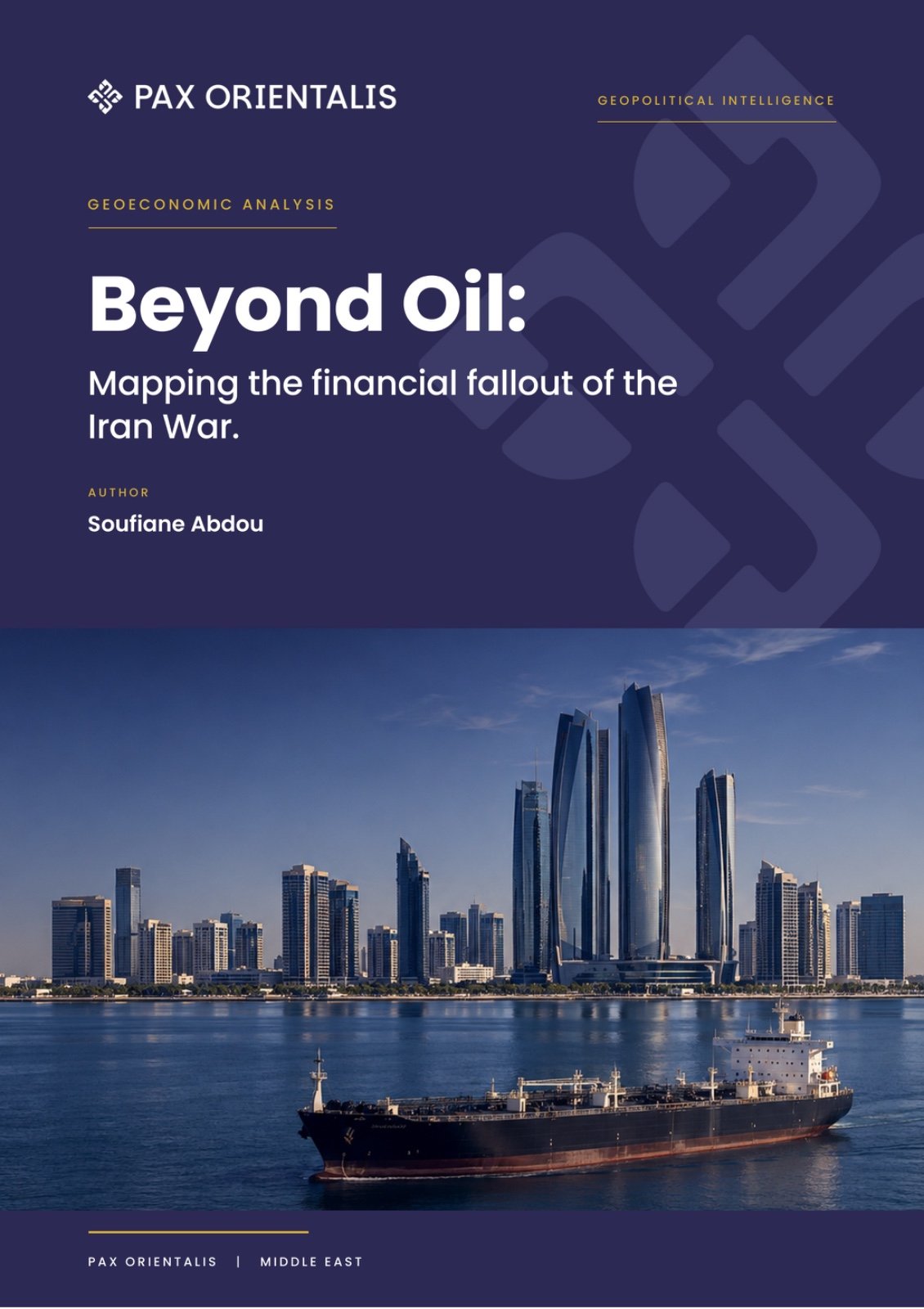
Beyond Oil: Mapping the Financial Fallout of the Iran War

When the Strait of Hormuz is threatened, attention turns to the oil price. This article looks at what happens after that. It follows how the 2026 Iran War has travelled through the economies of the Gulf Cooperation Council. It traces six channels: energy and exports, trade and logistics, investment confidence, inflation and financing, credit quality, and fiscal pressure. The author argues that exposure to the conflict depends less on oil dependence alone than on four factors: export routes that bypass Hormuz, fiscal and sovereign buffers, the structure of the banking sector, and sectors that depend on confidence, such as tourism and logistics. The result is uneven. Saudi Arabia and the UAE are cushioned by bypass pipelines and sovereign wealth. Qatar's budget deficit more than doubled between the first two quarters of 2026, and Bahrain looks more fragile. The article also maps this exposure and sets out three scenarios for what comes next: escalation against economic and digital infrastructure, a partial resumption of strikes, or a ceasefire that holds.
Soufiane Abdou
November,2026
latest publication

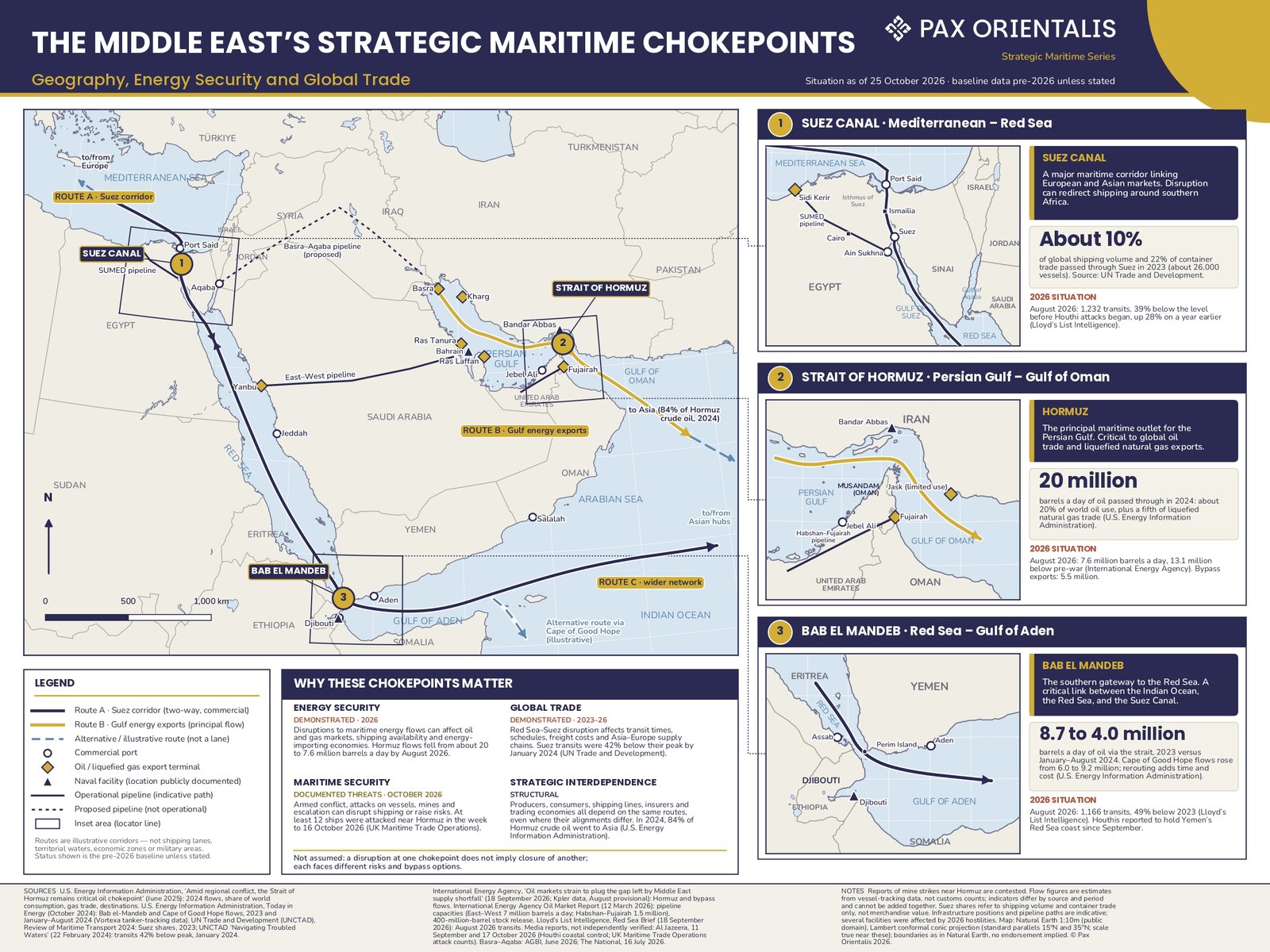
The Middle East's Strategic Maritime Chokepoints

From the Strait of Hormuz to the Suez Canal, the Middle East’s maritime chokepoints are critical arteries of global trade, energy security and geopolitical influence. This map highlights the region’s key maritime passages and their strategic significance, illustrating how geography, regional tensions and control over vital shipping routes shape the global economy. Understanding these chokepoints is essential to assessing the region’s evolving geopolitical landscape and its implications for international trade and security.
Soufiane Abdou
October,2026

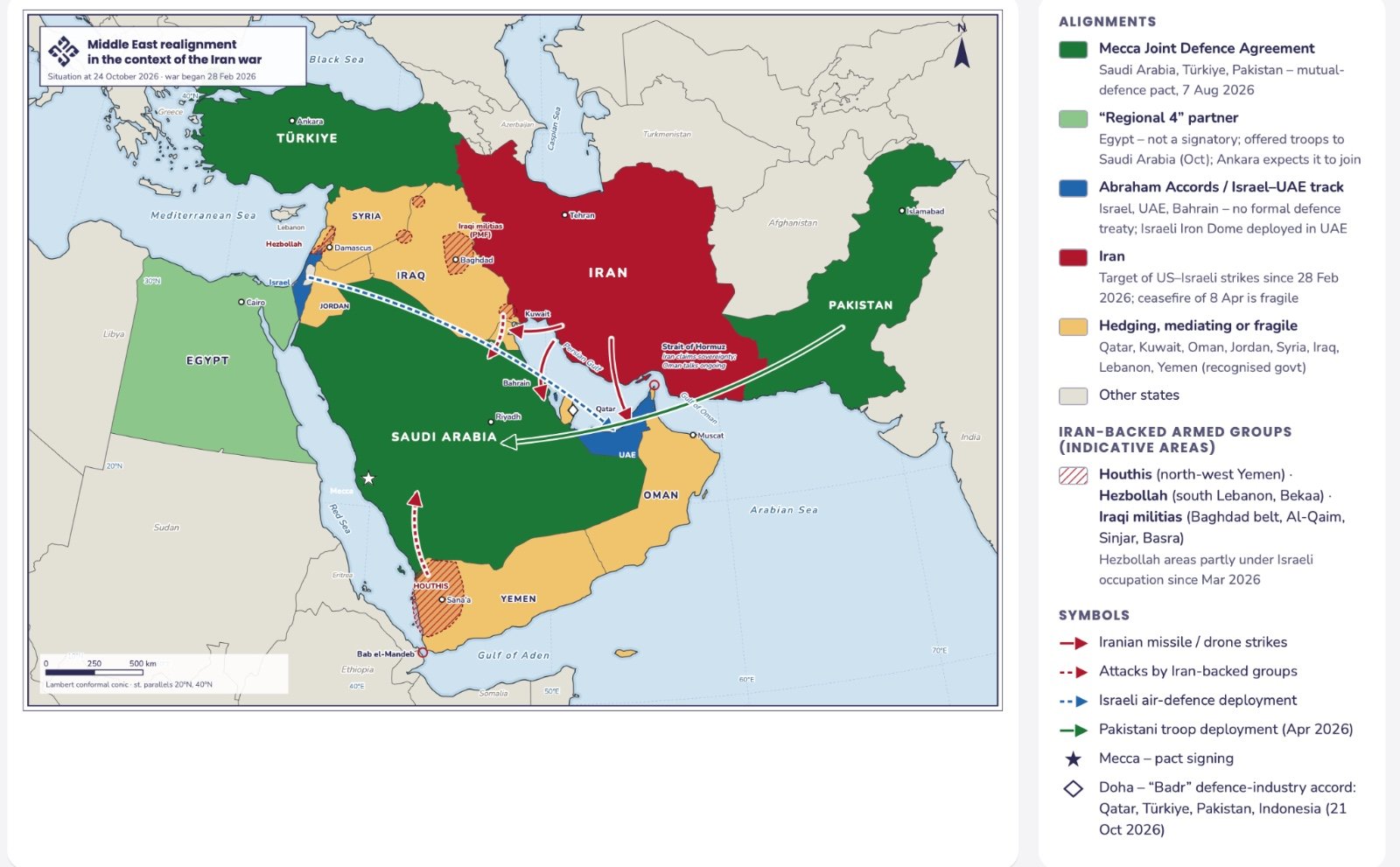
Middle East realignment in the context of the Iran war

Since the war in Iran began in February 2026, regional powers have been rethinking whom they rely on for security. This map shows where new defence partnerships have emerged, where states are hedging, and where Iran retains influence through armed groups. This realignment of alliances as of October 2026 shows the very dynamic nature of the international politics at play in the region.
Soufiane Abdou
October,2026

Let's Work Together

We believe in building meaningful collaborations that drive ideas forward. Whether you’re a policymaker, researcher, or institution, we’re here to exchange knowledge, share perspectives, and create impact together.

Get in touch with us